


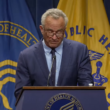



Edward R. Martin Jr., interim U.S. attorney for Washington, D.C., has ordered an internal review of the Department of Justice’s (DOJ) handling of the prosecutions of January 6 protesters.
Martin made the announcement in an email to staff on January 27, where he revealed that he had appointed acting Chief of the DOJ’s Criminal Division Denise Cheung and Chief of the Fraud, Public Corruption, and Civil Rights section Jonathan Hooks to head up a “special project” tasked with investigating the handling of more than 250 cases in which the DOJ had charged people with obstructing an official proceeding of Congress. This decision comes after the U.S. Supreme Court issued a ruling in June that confirmed that the statute had been too broadly applied to these cases.
“Obviously, the use was a great failure of our office … and we need to get to the bottom of it,” Martin wrote, requesting a preliminary report by January 31. “Please deliver to Jonathan and/or Denise all information you have related to the use of [obstruction] charges including all files, documents, notes, emails and other information.”
BREAKING: Trump-appointed prosecutor is opening up an internal review of the Justice Department to investigate its decision to prosecute hundreds of J6 defendants.
Ed Martin, the acting U.S. attorney, has asked prosecutors to turn over information related to the case.
The… pic.twitter.com/NZliFvTvDS
— Libs of TikTok (@libsoftiktok) January 27, 2025
Martin, who was temporarily appointed as U.S. attorney for Washington, D.C., on January 20, was supposed to serve as the interim attorney for 120 days, but he has since informed employees that he expects to take on the role permanently. Prior to taking this job, Martin served as a defense attorney for three different January 6 defendants.
He has already begun trying to clean house in his office in accordance with Trump’s plans to end the weaponization of the federal government, including closing the office’s Capitol breach prosecution unit and removing that unit’s chief, Gregg Rosen.
This comes after Trump not only pardoned roughly 1,500 January 6 defendants, but also signed an executive order titled “Ending the Weaponization of the Federal Government” — which tasks agency heads with taking “appropriate action to review the activities of all departments and agencies exercising civil or criminal enforcement authority of the United States” over the past four years and identifying “any instances where a department’s or agency’s conduct appears to have been contrary to the purposes and policies of this order.”


